
Senior Accredited Psychotherapist and Clinical Supervisor.
Perhaps you have arrived here looking to make sense of something. You are functioning and capable. Privately, you sense that old patterns, family dynamics, or past experiences still shape your relationships and your sense of self. I’d like to help if I can. I work with adults in Bromley and across South East London.
I work with adults in longer-term psychodynamic therapy. My clinical focus covers trauma and dissociation, complex family dynamics, and burnout and disconnection. Many clients arrive during menopause and midlife, when earlier patterns resurface alongside new pressures. Therapy with me is an investment in understanding yourself more fully, one that tends to extend beyond the therapy room. For some clients, therapeutic writing offers an additional way in, alongside the talking work. I also offer clinical supervision for qualified and trainee therapists.
About this practice
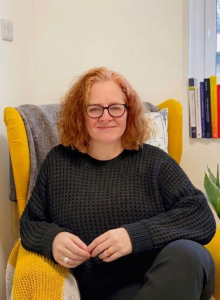
Samantha Merry is a BACP Senior Accredited Psychotherapist and Clinical Supervisor based in Bromley, South East London. She holds a PGDip in Psychodynamic Psychotherapeutic Counselling, an MA in Psychoanalytic Studies, and is currently completing a Professional Doctorate in Psychotherapy and Psychological Trauma at the University of Chester.

Weekly sessions in a private, discreet space in Bromley. For trauma, dissociation, grief, complex family dynamics, and burnout, worked through in person, at a pace you set.
The same depth of work, wherever you have confidential space, whether that’s at home, at work, or between meetings. Sessions run over Zoom.
Support for qualified and trainee therapists, in person or online, fortnightly or monthly. Grounded in psychodynamic training, with room for your own clinical questions.


