Have you found yourself defending someone who treated you badly, or feeling loyal to a person whose care was unreliable at best and harmful at worst? That experience is more common than most people realise, and it has a name: trauma bonding.
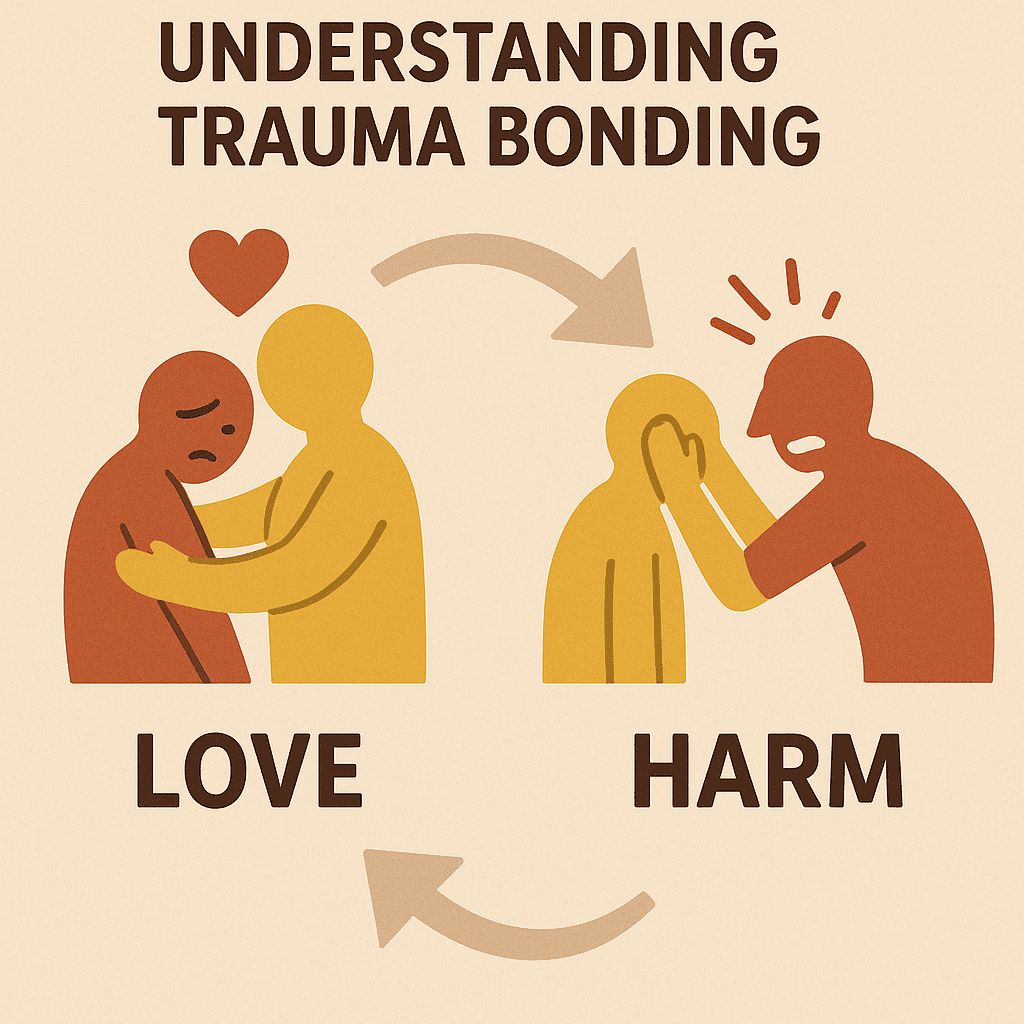
Trauma bonding develops when harm and connection become entangled in the same relationship. It’s most visible in abusive partnerships and toxic family dynamics, in situations where safety is offered with one hand and withdrawn with the other. This isn’t about being weak or lacking judgement. It’s about how the nervous system responds to inconsistent care, and for many people, that pattern started long before the relationship they’re currently trying to understand.
How These Bonds Sneak Up on Us
A child whose caregiver is warm one moment and cold the next doesn’t stop seeking connection. They learn to stay close anyway, because even unreliable safety feels preferable to none. That early learning doesn’t disappear in adulthood. It goes underground, and resurfaces when we encounter a similar dynamic: someone whose warmth is genuine but whose behaviour is unpredictable. Part of the nervous system recognises the pattern and moves toward it, because it feels familiar, and familiar has always meant survivable.
The mind tries to manage this by holding two versions of the person simultaneously: the one who is kind, and the one who causes harm. The kind version offers relief, and relief becomes something to return to, even when the cost is high. This isn’t a failure of intelligence. It’s a very human response to an impossible situation.
Who’s Most Likely to Get Caught in the Loop?
Trauma bonds tend to grow in people who’ve had patchy or painful relationships in early life. If your caregivers were inconsistent, neglectful, or frightening, your internal compass for love might’ve grown a little wonky. You might seek out what’s familiar rather than what’s kind, because your body says this is how love feels, even if your brain says run.
People with low self-worth, or those who’ve been told (explicitly or otherwise) that they’re too much, not enough, or hard to love, are particularly vulnerable. So are those who are isolated. Abuse thrives in secrecy, and when there’s no one around to say hang on a minute, this isn’t okay, it’s easier to stay stuck.
So, How Do We Untangle Ourselves?
Leaving a trauma bond isn’t just a matter of packing a bag and walking out the door. If only. Leaving a trauma bond takes time, and usually some form of support alongside the decision itself. Here’s what can help:
- Learning What’s Really Going On
Understanding trauma bonding can feel like being handed a torch in a dark cave. You realise: Oh….it wasn’t love, it was survival. And with that, the self-blame starts to melt. - Listening to the Body’s Wisdom
The body is no fool. It tenses around danger long before the mind catches up. Learning to notice how you feel in your skin – not just in your head – can be a powerful guide. Sometimes your gut knows what your heart’s still negotiating. - Finding New Ways to Attach
Healing doesn’t happen in a vacuum. Whether it’s therapy, a support group, or one good friend who doesn’t flinch when you’re honest, safe relationships help rewrite the old scripts. They show us that love can be steady, respectful, and imagine this….kind. - Letting Go of the Dream
One of the hardest parts of leaving is grieving the relationship you hoped it would be. That fantasy version can be incredibly hard to let go of. But mourning that dream, with compassion, not shame, helps loosen the emotional glue that’s been holding everything in place
You’re Not Broken – You’re Adapting
It’s not easy. Healing is rarely tidy. But if you’ve been caught in a trauma bond, it’s not because you’re foolish or flawed. It’s because, once upon a time, this way of relating helped you survive. The good news? You can learn new ways of being. It’s never too late to choose connection without fear.
You deserved safety then, and you deserve it now. No ifs, no buts.
You’re Not Broken. You’re Adapting.
If you’ve been caught in a trauma bond, it’s not because something is fundamentally wrong with you. It’s because, at some point, this way of relating helped you survive. The patterns that form around inconsistent or harmful care make complete sense given where they came from. Understanding that is usually where the work of changing them begins.
Therapy can help you make sense of why these patterns formed, what they’ve been protecting you from, and how to build relationships that don’t require you to manage fear alongside love. My work is relational and trauma-informed, and I work at a pace that respects the difficulty of this material.
If any of this resonates and you’d like to explore working together, get in touch at samanthamerry.co.uk/contacts.
Resources worth exploring:
- Why Does He Do That? by Lundy Bancroft, one of the most widely recommended books for people trying to understand controlling and abusive relationship dynamics, written clearly and without minimising the reader’s experience
- Attached by Amir Levine and Rachel Heller, an accessible account of adult attachment styles and how early relational patterns shape who we’re drawn to and how we behave in close relationships
- Whole Again by Jackson MacKenzie, written for people recovering from relationships with narcissistic or emotionally abusive partners, with a practical and compassionate focus on rebuilding self-trust
- The Survivors Trust (thesurvivorstrust.org), a UK-based umbrella organisation with a helpline and directory of specialist support services for survivors of abuse and trauma
- Women’s Aid (womensaid.org.uk), for anyone experiencing or recovering from domestic abuse, with resources, a helpline, and local support services across the UK
Samantha Merry is a BACP Senior Accredited Psychotherapist in private practice in Bromley, South East London, and a doctoral researcher at the University of Chester.