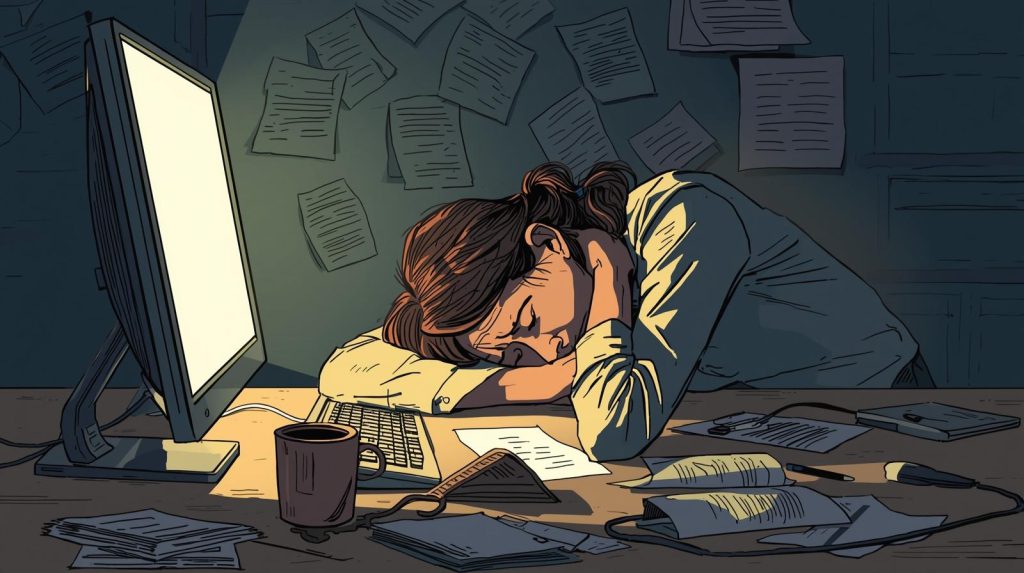
Burnout has many disguises. Sometimes it stomps in wearing a corporate lanyard and a caffeine tremor. Sometimes it sneaks up after months of workplace stress, where constant deadlines, emails, and late nights quietly erode your reserves. At other times it arrives alongside the shock of a new health diagnosis, or the slow wear of a chronic condition that makes everything feel heavier than it used to.
Burnout can also take more specific forms. It may drag behind a whirring ADHD mind that has sprinted through too many open tabs in real life. Or it may arrive with a menopausal hot flush that hijacks sleep at three in the morning. Whatever shape it takes, burnout is the moment your internal battery shows 1%, and the charger is nowhere to be found.
Menopause Burnout
Midlife women often tell me they once spun plates “for Britain,” but now a dropped teaspoon can feel like collapse. Research shows that menopausal symptoms, especially poor sleep and mood swings, are strongly tied to emotional exhaustion. When workplace support is thin and family demands are constant, the risk of becoming cynical rises too.
Why does this happen? Think of the nervous system as a kettle that once boiled at 100 °C. Falling oestrogen resets the thermostat, and ordinary office heat can suddenly feel like a furnace. Shame, confusion, and silence add steam. Many clients whisper that talking about hot flushes or brain fog at work feels “unprofessional.”
In burnout psychotherapy, our first task is to name the mayhem. Therapy gives space to make sense of the worry. Together we map triggers, night sweats, micro-managing bosses, difficult family dynamics, and install circuit-breakers. We also explore the grief beneath the surface: bodies changing, parenting roles shifting, career fluctuations. Sometimes this means a candid email requesting quieter rotas; sometimes it means learning to sit with guilt-free rest.
When Neurodiversity Runs on Empty: ADHD & Autism Burnout
Autistic and ADHD clients often describe workplaces as “designed to keep me stressed.” The academic term is a demands-resources mismatch: high sensory, social, and multitasking demands collide with too few supports. It’s like an app running endlessly in the background, draining energy.
Masking can make things worse. Suppressing stims, rehearsing eye contact, or forcing small talk adds a hidden tax. Community researchers define autistic burnout as long-term, debilitating fatigue plus a loss of function and tolerance, triggered by this relentless mismatch.
Instead of pushing through until collapse, we start noticing what actually drains or restores energy. An open-plan Monday meeting? That’s often a thunderstorm. A quiet Tuesday with a spreadsheet? Clear skies. Together we explore practical ways to protect energy without guilt, lines like “I work best with a written agenda, in advance please” or “I’ll join this one by audio only.” These aren’t tricks; they’re respectful ways of working with your nervous system so your fuel lasts longer.
We also uncover the unconscious pressure to “pass” as neurotypical. Many discover their harshest critic is internal, forged in playgrounds or family dinners where fitting in felt essential for safety. Loosening that grip often restores energy faster than any productivity hack.
Burnout, workplace stress and therapy
Workplace stress is rarely eased by quick-fix resilience toolkits. Psychodynamic psychotherapy offers something different: a consulting room where you can think about, experience, and try out new ways of being. In that space, old patterns of relating and coping can be noticed and understood, rather than repeated automatically. The therapy relationship becomes a rehearsal room for life outside, where boundaries can be tested, feelings allowed, and self-permission slowly strengthened. What is first felt and practised in the safety of therapy can then be carried into the wider world, making change both more durable and more authentic.
Psychotherapy in Bromley
I work with people experiencing workplace stress and burnout, including the ways this can be amplified by ADHD, autism, menopause, or by the challenges of life. I offer a professional, supportive place to think through what you’re carrying, to understand how burnout shows up in your life, and to explore new ways of restoring energy and balance. Therapy isn’t about quick fixes or pep talks, but about creating the conditions where you can meet yourself with more clarity, permission, and hope.